January 26, 2007


Toward A Socialist Paradise: Venezuela Governor To Seize Airport


After eight years of Hugo Chávez, kidnappers and thieves prowl
Venezuela’s Simon Bolivar International Airport: I learned about that the hard way. Expect more of the same as the state expropriates a nearby privately owned airport (Photo: Simon Bolivar terminal)


See Thomas Lifson's comments on this article at The American Thinker.


By David Paulin

For years, airline passengers disembarking at Venezuela’s main airport faced an unsettling experience: Simon Bolivar International Airport is a model of inefficiency. It's what you could expect from most state-owned and Venezuelan managed enterprises. Passengers going to the taxi stand might get picked up by a pirate taxi – the driver having bribed or snuck his way past apathetic security personnel. Many travelers paid several times the going rate for the 30-minute trip to Caracas. Today, after eight years of Hugo Chávez’s “revolutionary” government, the airport is more disorganized than ever. And it’s dangerous. Four years ago, I found out just how dangerous.

But I’m getting ahead of myself.

Here’s the latest news from Venezuela’s emerging socialist paradise: A state governor allied with President Chávez has ordered the expropriation of a private airport in Charallave on the outskirts of Caracas. The reason, according to Miranda Gov. Diosdado Cabello, is to “substantially improve the use of the airport” by siphoning off air traffic from Simon Bolivar airport in nearby Maiquetia.

Some 500 shareholders were surprised by the announcement, airport manager Henry Vazquez told the Associated Press. And no wonder: The airport already was controlled by government officials and soldiers. Obviously, there are really only two reasons for the take-over: Power and control. Socialism has nothing to do with it.

The move comes as Chávez has vowed to nationalize “strategic sectors” – including private firms in which U.S. companies have stakes in telecommunications, electricity, and the oil industry.

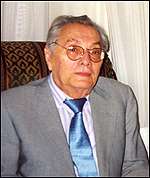
The take-over announcement comes days after a remarkable news conference in Caracas given by Luis Miquilena, 87, who guided Chávez to his first landslide election win. A long-time leftist, Miquilena left Chávez’s cabinet five years ago, and at the news conference he savaged El Presidente. Miquilena thus joined a long list of former Chávez allies who parted company with the autocratic populist after seeing what he was all about. A similar pattern occurred in Cuba as Chávez mentor Fidel Castro showed his true colors, following his democratic “revolution” some 50 years ago.

"This is a government with a hypocritical authoritarianism that tries to sell the world certain democratic appearances," Miquilena said at a daily newspaper, El Nacional, which has been critical of Chávez’s government. "The government is not abiding by any rule. It has all the characteristics of a dictatorial government."

As Miquilena nears the end of his life, it is ironic and sad that he must now bear witness to Venezuela’s slide into what has all the appearances of a dictatorship, albeit for its democratic trappings. He had held his tongue until now. As a young man, Miquilena saw Venezuela emerge from the dictatorship of Gen. Marcos Perez Jimenez into a democracy. By some accounts, he was tortured by that dictator’s secret police.

Miquilena’s comments came days before Chávez was expected to be ruling by “decree.” And once that happens, don’t expect the nation’s airports to hum with efficiency.

Kidnapped

Four years ago, I learned just how bad things had gotten at Simon Bolivar International Airport when I disembarked from a KLM flight from Amsterdam. Having been through the airport many times before, when living in Venezuela, I figured I could differentiate between the good guys and bad guys.

I was wrong.

Getting into a taxi, my driver tossed my bag into the back seat, and I slide in right next to it. Suddenly, two other guys opened the doors on either side and got in. I heard the snap of automatic door locks.

Immediately, I knew what was happening. Frantically, I pulled at the door knobs.

“Calm down, calm down,” said the small wiry man who had pretended to be a taxi driver – right down to the official badge.

Helplessly, I looked out the window as we slowly drove off: The gringo traveler and his three Venezuelan companions in a taxi. Thirty feet away, two apathetic National Guardsmen were engaged in small talk.

The guy in the right-font seat opened the glove compartment. I heard the sickening sound of a semi-automatic being cocked. I knew enough about this sort of thing to know that your chances of survival go down significantly once you’re kidnapped.

I was calm, yet seized with dread. I wondered if the last thing I’d ever see was the guy in the right-front seat turning around and firing a bullet into my chest. The three of them were in their 40s and 50s and looked quite ordinary.

One flipped through my U.S. passport and, seeing a residency stamp for Jamaica, somehow confused me for a Canadian. Maybe it was my lucky day.

Jamaica is a sovereign country, right?” one said.

“Yes, I have a wife and two kids there,” I replied. It was a lie, calculated to make me seem more human to them. They looked like family men.

They were disappointed I didn’t have more cash – so I overstated the value of the Jamaican dollars I was carrying. That made them happy.

“We’re poor. That’s why we’re doing this,” one of them said. He professed solidarity with Hugo Chávez.

Thirty minutes later, they let me out in a working-class section of Caracas. They'd picked me clean, taking a few hundred dollars, a camera, and a cell phone. They gave me cab fare to get to my destination.

Later, I spoke over the phone with a security officer at the U.S. Embassy.

“I used to live here," I said. "So can I assume it's like it was a few years ago; that it would be a waste of time to report this to the police?”

“Yes, you can assume that.”

He added, “This has been happening a lot. I shouldn’t say this, but a few days ago I got an irate call from the head of security for one of the U.S. airlines flying here.

“One of their captains was kidnapped. It happened exactly like you described.”

KLM, for its part, was wise to this. My flight’s steward told me that KLM no longer let its crews stay overnight in Venezuela: too dangerous. They flew the plane to Curacao and then returned the next day for passengers.

Violent crime has soared in Venezuela after eight years of Chávez. Typically, the sorts of folks who cheer on Chávez are the types who claim that poverty and crime are related. In other words, when poverty goes down, so does crime.

Yet Chávez claims to have reduced poverty – and still crime is soaring. The more likely factors that explain the crime explosion are the same ones found at the international airport – epic levels of inefficiency, corruption, and mismanagement. Travelers heading to Venezuela would be well-advised to look at the State Department's hair-raising report on security there.

Regarding the main airport, here’s an excerpt:

Maiquetia Airport, the international airport serving Caracas, is dangerous and corruption is rampant. Concerns include personal property theft, muggings, and “express kidnappings” in which individuals are taken to make purchases or to withdraw as much money as possible from ATMs, often at gunpoint. The Embassy has received multiple, credible reports that individuals with what appear to be official uniforms or other credentials are involved in facilitating or perpetrating these crimes.”

Once Chávez’s goons get their hands on the Charallave airport, you can expect more of the same: That’s how authoritarian socialism works.

January 10, 2007


Telephones for the Classes – Socialism for the Masses

Need to phone Venezuela? Forget about it if Hugo Gets His Way

(A magazine article based on this post, "Chavez's New Statism" may be found at FrontPage Magazine. Click here -- DP.) 


By David Paulin

President Hugo Chavez has announced his intention to pursue an authoritarian socialist model for Venezuela, and to nationalize key companies. Predictably, the nation’s stock market and currency has gone into a nasty tail spin.

"We're heading toward socialism, and nothing and no one can prevent it,” Chavez declared on Monday, in a national television address. Today he will be sworn into a third term that runs until 2013.

Chavez's embrace of socialism should surprise nobody who has been paying attention to what he's been saying. He was announcing his radical intentions, loud and clear, as early as 1999 when he took office. Specifically, Chavez vowed on Monday to nationalize Venezuela’s telecommunications company, unspecified electrical firms, and to reduce the Central Bank’s autonomy. Among other things, he also called for additional powers for himself so that he could rule by decree.
In respect to the nationalizations, the biggest prize would be Venezuela’s publicly traded telecommunications company, Compania Anonima Nacional Telefones De Venezuela (known by the Spanish acronym CANTV, pronounced "Can-Tee-V”). “Let it be nationalized," he said. "The nation should recover its property of strategic sectors.”

Before 1991, to be sure, CANTV was a state-owned and managed phone company. It also was an international basket case: People calling across town had trouble getting a dial tone – much less a connection. Calling other cities was virtually impossible.

I lived in Caracas during these years, working as a Caracas-based foreign correspondent for several American daily newspapers. The story of what CANTV was – and what it became in the hands of can-do American managers – is a remarkable one. It’s also testimony to the power of markets to transform an economy – in terms of providing investment, transparency, and accountability.

Inept Management

Poorly managed as a state-owned company, CANTV was rife with do-nothing political patronage jobs and corrupt unions that got what they wanted. In short, it was what you’d expect in a nation with a statist economy that, according to corruption-watchdog Transparency International, was among the world’s most corrupt.
Venezuela had a population of about 20 million people at the time – yet only 1.6 million of them had telephones. It wasn’t for lack of money. Rather, the money-losing state phone company took years to hook up phone lines – unless you had political connections, bribed the right officials or purchased a stolen line. The state phone company, according to some accounts, took out advertisements asking its customers not to use the phones too much.


Like many Third World countries, Venezuela realized it needed a modern telecommunications system to develop its oil-producing economy. After a highly politicized congressional debate, it privatized CANTV. A GTE Corp.-led consortium won a bidding process and acquired 40 percent of CANTV for $1.9 billion. The government retained 49 percent, and workers kept the remaining 11 percent. (Dallas-based GTE Corp. merged in March 2000 with Bell Atlantic to form Verizon Communications.)

Consider some of what the privatized CANTV accomplished: From 1992 to 1994, it invested more than $1.1 billion to upgrade and expand Venezuela's phone system – more than was spent during the 20 years preceding privatization.


Led by American managers, CANTV's 22,000 employees installed more than 863,000 phone lines by 1994 – 4 1/2 times as many as were installed during the two years preceding privatization.

More than 460,000 customers were added, three times more than CANTV connected during the two years before privatization.


Bottom line: By 1994, callers almost always got a dial tone. And they usually got a connection.

“The telecommunications system here was very poorly designed and maintained, with 40-to 50-year-old technology,” CANTV's 40-year-old president Bruce Haddad, a 19-year GTE veteran, told me during an interview in July, 1994.


Haddad had his share of problems. He was spoofed on a Venezuela comedy program, had annual reports tossed at him during an annual meeting, and was called a “gringo” and “foreigner.”


At one point, an arrest warrant that seemed politically motivated was issued against him. He was charged with complicity in a natural gas pipeline explosion, caused by a CANTV sub-contractor, which incinerated more than 50 motorists on a major highway. After lying low for a while, Haddad eventually turned himself in and was exonerated.


He and fellow GTE Corp. managers kept the company moving ahead through two bloody coup attempts (one led by Lt. Col. Hugo Chavez); draconian currency exchange controls, a 100 percent currency devaluation, 70 percent interest rates, and annual inflation of up to 100 percent.
Haddad and fellow GTE Corp. senior executive Douglas Mullen shocked Venezuelan workers by mingling freely with them at functions designed to build esprit de corps – something most status-conscious Venezuelan managers would never do.

It will be interesting to see how CANTV fares once it’s controlled again by Venezuelan managers: state employees of a government that, by all accounts, is involved in record levels of corruption.

Haddad, incidentally, never made it back to the states to settle down with his wife, Dorothy. They died when their corporate jet smashed into the side of a volcano near Guatemala City, Guatemala at 3:30 a.m. on Feb. 19, 1997. They were racing the clock to get to Dallas, where the couple was supposed to catch an airliner to China. Haddad was going there as part of his new position, senior vice president of international operations. Both were 43 years old. They had been high school sweethearts.

Author’s note: This was derived in part from articles I wrote for The Dallas Morning News while based in Caracas. For additional analysis, visit The American Thinker and The Devil's Excrement.

Also see these earlier posts:


January 8, 2007

CULTURE WARS

Visitors to a Texas Library Learn about Admirable ‘Traditional Values’ of Marriage and Community...IN AFRICA!

...An occasional report from the “People’s Republic of Austin” (Photo of Elizabeth Kahura)


UPDATE: See Thomas Lifson's comments on this article at The American Thinker.


By David Paulin

Ann Coulter delivered a speech in hip and liberal Austin, Texas last year and nearly provoked a riot. The catcalls and boos that left-wing University of Texas students hurled at her hit a pitch when one student posed a vulgar question, intended to attack the conservative columnist's concepts of marriage and traditional values.

“Let him go” chanted supportive students at LBJ Library Auditorium, after nearby campus police quickly arrested the 19-year-old man.

Curiously, no such protests erupted during an event on traditional values a little over one week ago at a city library. Why? Perhaps it’s because the values being discussed were not American – conservative or otherwise.

No, this event focused on traditional African values – or as a library news release explained: the “traditional African values of family, community, responsibility, commerce, and self-improvement.” That, at least, is the virtuous picture of Africa that Elizabeth Kahura, a native of Kenya and professional “storyteller,” would have you believe. She spoke during an event associated with Kwanzaa week – the controversial African-American holiday which ended a little over one week ago.

In one sense, Kahura is the perfect cheerleader for the Africa-oriented Kwanzaa, which is taken very seriously in Austin.

Sixteen years after arriving in America, Kahura makes a career out of idealizing her native Africa – all while keeping both feet firmly planted in multicultural America. Her mission is to “enlighten the world on the true meaning of Africa,” as one Austin Public Library news release puts it.

Kahura, who settled in Texas, has spent ten-plus years playing up Africa’s virtues. At libraries, schools, and day care centers, she utilizes colorful presentations to show off African clothing, music, and dance. She was a big hit last year among grade-school kids in nearby Bastrop: They got to “dress up like an African King and Queen to demonstrate African Village life.”

In Austin, Kwanzaa gets plenty of serious coverage from the politically correct daily newspaper, the Austin American-Statesman. No matter that conservatives of all colors have long derided Kwanzaa as racial hucksterism with Marxist and racially charged overtones.

Nearly 40 years ago, Kwanzaa was dreamed up in California by Ronald Everett, an African-American who was an adherent of various black extremist groups and causes. In the early 70s, he served jail time for the false imprisonment and torture of two women who had been his followers. Completing his sentence, he reinvented himself. Today he’s Dr. Maulana Karenga, professor of black studies at California State University in Long Beach.

Over the years, Kwanzaa has been variously described as an African-American alternative to Christmas or a focal point for African-American pride and community. According to one survey, however, it's celebrated by a mere 1.6 percent of Americans – or 13 percent of African-Americans.

At Kwanzaa events you see few if any white faces, yet Kahura insists, “Kwanzaa is not just an African-American concept. It can help anyone."

She went on, “It’s about teamwork, unity, and people walking together. It celebrates culture and it can link African-Americans to their roots and their mother language.”

Oh really? Kahura obviously needs to learn more about her adopted country: American culture has always embraced the civic-engagement aspects she touts. Indeed, America’s remarkable levels of civic-engagement were highlighted in Alexis De Tocqueville’s “Democracy in America,” his seminal volume first published in 1835.

To be sure, a debate is underway about the status and possible decline of America’s levels of civic-engagement. Some experts say it remains healthy. Whatever the case, it’s doubtful Kwanzaa has contributed anything to America’s virtue of civic-engagement, as the holiday has morphed from its racist and militant origins into mainstream respectability. Today it’s utterly beyond criticism or probing questions by the mainstream media.

Multiculturalism Gone Berserk

How did this happen? Obviously, Kwanzaa’s ideologues rode the wave of multicultural and politically correct ideology that eventually infected the mainstream media. As a result, questions that ought to be asked are stifled. One example was a recent Kwanzaa puff piece from Cox News Service, owners of the American-Statesman, whose headline trumpeted: “Kwanzaa glows even brighter after 40 years.”

Completely missing was any mention of Dr. Maulana Karenga’s sleazy past; not a word about his criminal record and extremist associations, observed the NewsBusters blog. A provocative headline accompanied its incisive comments: “Cox News Honors Kwanzaa Creator, A Rapist and Torturer.”

As to Kahura, nobody has dared to publicly ask an obvious question about her: How can a Kenyan immigrant be so presumptuous as to settle in America and then make a veritable career out of lecturing Americans about traditional African values?

Let’s face it. The values she admires are mostly a product of her imagination. One reason Africa is a basket case, after all, is precisely because of its values.

Indeed, the idealized Africa Kahura extols would be unrecognizable even to the high-minded readers of America’s most liberal newspaper, The New York Times. Consider a Times article from May, 2005: “AIDS Now Compels Africa to Challenge Widows’ ‘Cleansing’.”

It focused on a bizarre yet common practice in rural areas of Zambia and Kenya and “a number of nearby nations.” After a husband’s funeral, a ritual takes place: “sex between the widow and one of her husband's relatives.”

Its purpose is “to break the bond” with the husband’s spirit, according to The Times. “Widows have long tolerated it, and traditional leaders have endorsed it, as an unchallenged tradition of rural African life."

Did the school kids whom Kahura dressed up as African kings and queens learn anything about this? I have yet to attend one of Kahura’s lectures, to be sure, having only had the pleasure of reading about them and seeing her on television. Even so, I doubt she’s ever waxed poetic about the joys of sex with bereaved widows – whether they want it or not.

Kahura caught my attention two years ago, not long after I moved to Austin. Reading a news item about one of her upcoming presentations, I was dumbfounded by what seemed to be a case of multiculturalism gone berserk. I dashed off a protest letter to the America-Statesman: It wasn’t published.

I complained to my public library which was hosting her presentation. A library official responded that Kahura was a well-respected “educator” and much in demand for events such as Kwanzaa, Black History Month, or for various educational purposes.

Conservatives, incidentally, have an epithet for this town: “People’s Republic of Austin.”

Child Sexual Abuse

Presumably, Kahura’s presentations about her idealized Africa also skip over the pesky issue of child sexual abuse in Africa. The problem is persistent in Kahura’s native Kenya – not to mention in South Africa, Zimbabwe, Zambia, Uganda, Kenya, and Sierra Leone, according to an article in The New York Times last December, "Sex Abuse of Girls Is Stubborn Scourge in Africa." Dr. Rachel Jewkes, a specialist on sexual violence with South Africa’s Medical Research Council, was quoted as saying: “The prevalence of child rape in South Africa goes from really, really high to astronomically high.”

Some traditional values, huh?

Presumably, Kahura also skipped over another traditional African value: promiscuous sex. Once again, the venerable New York Times dealt with this in an article, “AIDS in Africa: Experts Study Role of Promiscuous Sex in the Epidemic." It was published way back in 1990, about the time Kahura first left her idyllic Kenya and came to America.

That article, believe it or not, actually stated that sexually promiscuous behavior may have something to do with Africa’s legacy of colonialism!

Presumably, Kahura’s lectures also have overlooked another ritual based on traditional African values – “female circumcisions.” Last June, The New York Times dealt with this in a delicately titled article, "Genital Cutting Raises by 50% Likelihood Mothers or Their Newborns Will Die, Study Finds.”

It stated, “In a number of African cultures, genital mutilation is part of a coming-of-age ceremony, and defenders have contended that it is a cultural practice, like male circumcision among Jews, with few, if any, proven long-term health consequences.”

Incidentally, the term “genital cutting” is the euphemism preferred by multicultural types who consider the more graphic “female circumcision" (the removal of the clitoris) to be too negative and judgmental of cultures that practice this procedure.

Modern-day Slavery

Some African-Americans and Kwanzaa diehards may idealize Africa – and Kahura may cater to their fantasies. However, they can count their blessings for having grown up in America, not Africa. Consider the plight of many African children – the subject of a New York Times article last October, "Africa’s World of Forced Labor, in a 6-Year-Old’s Eye."

African children sold into indentured servitude work up to 14 hours per day and “are part of a vast traffic in children that supports West and Central African fisheries, quarries, cocoa and rice plantations and street markets,” reported The Times.

“The girls are domestic servants, bread bakers, prostitutes. The boys are field workers, cart pushers, scavengers in abandoned gem and gold mines.”

Not very idyllic, huh?

Here’s a suggestion. The next time Kahura delivers a lecture on traditional African values, maybe the school or library or daycare center that’s hosting her can provide some counter-balance: Get a patriotic professor from the University of Texas to give a talk on American and Western values – with the aim of illustrating how those values have made us who we are.

Yeah, I know. In my dreams.


From the author:
….Readers that got this far may be interested in an Op-Ed piece I wrote in July, 2005 regarding the uproar over Mexico’s allegedly racist postage stamps. The piece, “All the Colors of the Rainbow,” ran in The Philadelphia Inquirer and Fort Worth Star-Telegram.

All the Colors of the Rainbow

Mexico’s ‘Racist' Stamp


By David Paulin

Revs. Jesse Jackson and Al Sharpton and White House spokesperson Scott McClellan all agree that a Mexican postal stamp plays upon racist stereotypes. Their unqualified agreement – from across our racial and political divide – is probably shared by most Americans. Our condemnation, though, may say a lot more about our culture than about Mexico's alleged racial insensitivity.

Don't get me wrong. I’m also put off by the stamp of a beloved Mexican comic-book character that, to me, also resembles a racist Jim Crow-era caricature: a goofy black male with exaggerated features such as thick lips. But Mexicans like the stamp, and President Vicente Fox has defended it.

So are Mexicans lining up to buy the stamp racists? I have my doubts, in part because I recall all too well how complicated racial politics can be in other countries, including in Venezuela and Jamaica where I have lived and worked.

Like in much of Latin America, for instance, Venezuela’s racial politics is complicated by the fact that it’s hard to tell just who is black -- and who isn’t. The reason is that 80 percent of Venezuelans are mixed race or mestizo. You find all sorts of gradations of colors and facial features. I first realized I was out of the loop when I asked a white upper-class Venezuelan friend why his country lacked any prominent black politicians.

“What about Claudio Fermin?” he asked with incredulity, referring to the dark-complexioned politician in the Democratic Action party.

"He's black?"

"He's as black as can be," he assured me.

He was right, of course. No doubt if I'd met Claudio Fermin on a street in Detroit or Atlanta, I would have figured that, yes, he was black. But in Venezuela, racial distinctions seemed harder to make.

It was an epiphany

How an American like me perceived somebody abroad, in terms of their race, often had more to do with culture and class than with skin color or features. It also had a lot to do with how people perceived and defined themselves.

Not all Venezuelans, to be sure, felt the same way. My Venezuelan girlfriend and I once visited one of the country’s venerable fortune tellers, called brujas. We were so impressed with Fanny – she provided correct numbers for a 4-digit Florida lotto, among other things – that my girlfriend referred a friend to her.

Fanny wasn't pleased.

"Why are you sending blacks to my house? I don't deal with that kind of clientele!"

I was shocked. I hadn't given it much thought until then. But Fanny was black. At least that's how she struck my girlfriend and me (who I guess, incidentally, would qualify as mestizo).

Perhaps Fanny was perhaps using one criterion that some in Venezuela used to determine race: kinky hair.

In overwhelmingly black Jamaica, racial politics and classifications were a lot more complicated. One strange thing I quickly realized: After a few days, I didn't regard Jamaicans I met as being "black.” The reason is that most ordinary Jamaicans, unlike many black Americans, didn’t define themselves by their skin color. Instead, they regarded themselves as Jamaicans – no matter what country they were in. It’s an attitude that upsets some black Americans.

For Jamaicans, however, that attitude affects how they perceive themselves – and how others perceive them. One Jamaican friend related how he was visiting Miami and was in a car with several white friends and acquaintances. Somebody blurted “nigger” in a casual conversation. An embarrassing silence ensued for a few seconds – for my Jamaican friend is black – until somebody in the group quickly clarified: "Of course, we're not talking about you. You’re a Jamaican!”

“It was like water rolling off a duck,” recalled my friend.

Interestingly, such an easy going attitude seemed common among Jamaicans, except for members of the left-leaning elite: newspaper columnists, university professors, and politicians. Many of them viewed the world through a racial prism – an obsession that gives them a lot in common with many black Americans, and with many left-leaning whites.

Ordinary Jamaicans, to be sure, also could be extraordinarily complicated about race.

"P-F-W” was one expression they applied to light-complexioned and upper class Jamaicans who, they complained, tried to “Pass for White.” They joked about whether those P-F-Ws could pass for white in America.

My Jamaican girlfriend, who looked something like the beautiful actress Angela Bassett, once referred to a fellow employee as “the woman with very African features.” I was a bit surprised, for my girlfriend had some African features of her own: sensuous lips that were far more beautiful than what any thin-lipped white women could get from a plastic surgeon. I never learned at what point sensuous lips morph into “African” lips, although it was one of many instances I encountered of blacks making seemingly harmless distinctions or judgments among themselves, based on racial features.

Interestingly, my girlfriend’s beauty opened doors throughout the Caribbean, though not in Cuba. There she was interrogated every time she tried to enter a Havana tourist hotel she was visiting

“Well, you look just like a nice Cuban girl!” the hotel manager of Spanish descent told her sympathetically, after she had vented her outrage. It’s a common complaint – one that left-leaning Jamaican and black American elites, curiously, never complain about.

When retelling her story of being wrongly “profiled,” incidentally, my girlfriend displayed none of the venom and insecurity one often finds among members of minority groups in America, when relating similar incidents.

For my part, I was surprised a Cuban doorman didn't find my Jamaican girlfriend as captivating as I did. But what constitutes beauty or “blackness” can be complicated, I realized. The same can be said for racism. You’d think decent people would know it when they see it. But I’m not quite so sure anymore – except to know that today in America it’s overused more often than not due to our hypersensitivity about race. There’s also no doubting that our ideals are simply much higher than in other countries – though we never get as much credit for those ideals as for our failure to consistently reach them.

As to Mexico, I’m withholding judgment on whether the country has a serious “race problem.” Despite that ambivalence I won’t be buying any of those postage stamps.


December 22, 2006


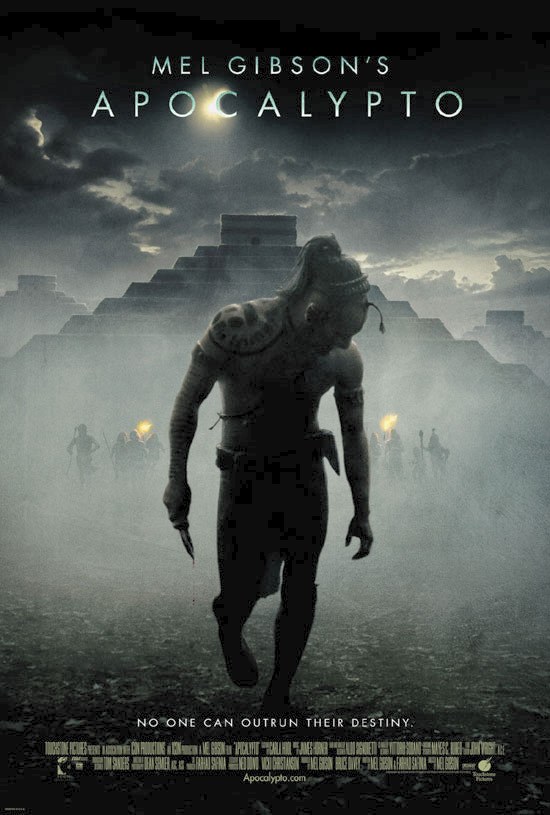
“Apocalypto” Enrages Leftist Elites

Mel Gibson’s epic about those fun-loving ancient Mayans and their fondness for human sacrifices has provoked cries of “racism” and “cultural insensitivity.”

By David Paulin

Filmmaker Mel Gibson has touched off a controversy with his violent epic, “Apocalypto,” but it has nothing to do with long-standing charges that he’s anti-Semitic. Members of the high-minded left are accusing Gibson of “racism” and “cultural insensitivity” for his allegedly unfair portrayal of ancient Mayan civilization. Much of “Apocalypto” revolves around the Mayan's charming predilection for internecine violence and human sacrifices.

Interestingly, some of “Apocalypto’s” harshest critics have offered few substantive complaints about the accuracy of the film’s gruesome scenes. What’s made them positively livid is that Gibson has violated a taboo that’s central to multiculturalism – the prohibition against criticizing other cultures, especially Third World and primitive cultures. This prohibition is especially applicable to Westerners – and to middle-aged white guys (like Gibson) in particular. Of course, there’s one exception to this no-criticism rule: You can vilify Western culture to no end.

"Culturally Insensitive’

Violating this no-criticism taboo is serious stuff in the minds of dedicated multiculturalists. Consider the toxic effect that “Apocalypto” had on Maya groupie Julia Guernsey, an assistant professor in the Department of Art and Art History at the University of Texas in Austin.

Guernsey saw “Apocalypto” earlier this month and was so outraged that she complained of an elevated heart rate right after the show. She went to “Apocalypto” with a movie reviewer from the Austin-American Statesman, Chris Garcia, who also hated the film and said as much in his review.

Garcia definitely had a good idea in inviting the professor to the local premiere. Right beside his review, he published a Q & A piece with Guernsey, "Apocalypto Is An Insult to Maya Culture, One Expert Says," which made for entertaining reading. The interview was done after the show.

“As we stagger out of a sneak peek of Mel Gibson's Maya historical thriller 'Apocalypto,' Julia Guernsey is visibly shaken,” Garcia wrote. He added, “I’m a little worried.” Talking herself into a frenzy as she unloaded on “Apocalypto,” Guernsey declared: “I can feel my heart beating faster talking about this!”

She went on, “I hate it. I despise it. I think it's despicable. It’s offensive to Maya people. It's offensive to those of us who try to teach cultural sensitivity and alternative world views that might not match our own 21st-century Western ones but are nonetheless valid.” (Emphasis added).

Defending her beloved ancient Maya as a “very sophisticated culture,” Guernsey accused Gibson of one of the worst sins possible in the politically correct world – committing “really offensive racial stereotyping.” Gibson, she sniffed, also gave short shrift to the Mayans considerable accomplishments. They included sophisticated advances in astronomy, language, mathematics, and urban planning.

Gibson directed the film and co-wrote it with Farhad Safina. It has generally gotten positive reviews and generated strong ticket sales. The multicultural left, however, has gone frothing mad over “Apocalypto,” which focuses on Mayan civilization in the period before the Spanish conquest. Its criticisms are revealing.

Curiously, Guernsey admitted that “Apocalypto’s” scenes of bloody sacrifices got more things right than wrong. “We have evidence to suggest that there were group sacrifices. But it would probably have been done as a pious act with solemnity,” she said. (Emphasis added.)

Got that? The butchery was done with much piety and solemnity. I wonder what the sacrificial victims had to say. Would Guernsey also evoke the mantra of “cultural sensitivity” to excuse cultural practices unique to the Muslim world – “honor killings” and “female circumcisions”?

If morally neutral professors can excuse bloody human sacrifices, where might such thinking take future academics? A few hundred years from now, will professors like Guernsey look back on Germany’s Third Reich and be so awed by its engineering marvels, martial expertise, and social unity that they’ll overlook the evil zeal with which its leaders sent six million Jews to the gas chambers?

This is not to say, to be sure, that the Mayans were Nazis, but consider some parallels. The Mayans carried out human sacrifices to appease their Gods – a perfectly logical reason for their bloodlust, when viewed from a morally neutral perspective. As for the Nazis, they undertook the Final Solution for logical reasons of their own – namely, to protect the Fatherland and its heroic values from the pernicious influence of Jewish intellectual and genetic degradation. Who are we to judge them? Obviously, cultural and moral relativism can lead to some pretty absurd extremes.

Garcia, for his part, also favors looking at the Mayans from a morally neutral perspective. The important thing for him is to understand the Mayan's point of view. To make this point, his review criticized one scene in which Gibson contemptuously “sums up all of Maya evil.” This was where “terrified sacrificial victims are lined up to have their hearts cut from their chests by a distinctly satanic priest garbed in feathers and paint and human bones, with claw-like fingernails and wild eyes,” he wrote.

Incredibly, Garcia then attempted to legitimize such conduct with a paragraph that provides an astounding example of moral confusion: “It would be nice to get some context for the violence, but Gibson refuses to illuminate the cultural and religious forces behind the ritualized murder, the better to paint these people as barbaric monsters.” (Emphasis added.)

Incidentally, the title of Garcia’s review in one of the Statesman’s editions was revealing: “BARBAROUS/Rather than Maya achievements, 'Apocalypto' lingers on sacrificial slaughter.”

What kind of headline might Garcia come up with for a movie that was blatantly anti-American? Here’s one that I bet you’ll never see: “Rather than Focus on America’s Decency and Achievements, Its Critics Focus Upon Its Mistakes and Past Sins.”

Wounded Ethnic Pride

Another dimension of leftist outage over “Apocalypto” concerns Hispanic-Americans who feel the film has assaulted their “ethnic” pride. Roberto Lovato wrote in New America Media that “Apocalypto” left him “pondering the history of racism, pillage and apocalyptic war through my own blood and family history.

“Like many Central Americans born and categorized as mestizos (mixed Indian and Spanish blood), I watched Apocalypto as someone who consciously revered the Maya and other indigenous groups while subconsciously prohibiting himself any real identification with them,” he explained.

How interesting that “Apocalypto” has engendered such feelings among some Americans of Hispanic descent. Why should they feel that way? It’s no doubt because they see themselves as Hispanic-Americans, and in this hyphenated identity they see themselves as more Hispanic than American.

A generation ago, such identify problems were rare. My family members who came through Ellis Island reinvented themselves as Americans. Our family name was Anglicized: Good riddance, Europe! Unfortunately, nobody these days says “Good riddance, Mexico!”

Precisely what put Mayan civilization into decline in southern Mexico and Central America is open to debate. But one theory argues that it contained the seeds of its own destruction. In the film’s opening scene, Gibson suggests this by citing a quote from historian and philosopher William James Durant: "A great civilization is not conquered from without until it has destroyed itself from within.”

Obviously, different people will see different messages in “Apocalypto.” Speaking at a film festival the ever controversial Gibson even drew some kooky parallels between the decline of Mayan civilization and America.

“Apocalypto,” on the other hand, also may reinforce the notion that not all cultures are equal, that America and the West are indeed the good guys – regardless of what the Maya-loving left may say. They demand “cultural sensitivity” of everyone except those who criticize America and Western culture.

After Gibson’s drunken anti-Semitic rant, I had little interest in seeing another of his pictures, especially after seeing “The Passion of Christ,” whose non-stop focus on Christ's torture had the feel of pornography. But given the kinds of people who hate “Apocalypto,” this is a picture I’m definitely going to see. It may just be a good antidote for these morally confused times.


October 20, 2006

Caribbean Jihad

Radical leftist British MP Puzzled Over Caribbean’s Links to Islamic-Inspired Terrorism

Diane Abbott never considers that her own hate speech and support of anything-goes multiculturalism is part of the problem

By David Paulin

Diane Abbott, a long-time member of the British Labor Party’s radical fringe, is well known for her anti-Semitic rhetoric, racially tinged identity politics, and venomous diatribes against Tony Blair and George Bush. Invariably, the British-born daughter of Jamaican immigrants can be counted on to view the world through a prism of race and post-colonial grievances. She contends terrorism has two “root causes”: America and Israel.

Now the controversial Member of Parliament has gone on record as acknowledging the existence of a strange trend: A number of young British men who are angry, black, and have Caribbean origins have been converting to Islam – and taking up jihad-inspired terrorism.

Abbott, 53, in a little-known
newspaper column she writes for a Jamaican newspaper, The Observer, admitted to being flummoxed at what’s causing the trend. She never considered it might have something to do with her own hate speech.

Abbott’s column described a number of terror plots and attacks with Caribbean ties that occurred after the Sept. 11 attacks five years ago. She echoed much of what was published here several weeks earlier.

In addition, Abbott noted the Caribbean emerged in mid-August in yet another jihad-inspired plot. This was the aborted suicide-bomb plot targeting as many as 10 trans-Atlantic airliners, possibly over U.S. cities, by detonating explosive chemicals hidden in carry-on bags. British authorities arrested 25 suspects, including some with Caribbean origins. In the plot’s aftermath, airline flights were disrupted worldwide.

Abbott’s column is noteworthy because it’s apparently the first time a prominent official has publicly endorsed the notion that several terror plots with Caribbean links represent more than an odd string of coincidences.

They are, Abbott contends, an ongoing trend.

Caribbean Terror Links

In the aborted plot targeting airliners, most of the alleged plotters were young British-born Muslims of Pakistani origin. However, Abbott noted, a “few Muslim converts of Caribbean origin have popped up in key roles.”

She mentioned
Brian Young, 28, a former Rastafarian who adopted the name Umar Islam three years ago on becoming a Muslim. A bus inspector, he was married to a young Muslim woman with whom he recently had a child. The British press appears to have reported no additional information about him, perhaps because of Britain’s rules limiting pre-trial coverage.

“Six of the people arrested live in my community in Hackney,” noted Abbott, a graduate of Cambridge University. In 1987 she became the
first black woman elected to Parliament.

Young men of Middle Eastern origin, to be sure, are bound to figure overwhelmingly into future Islamic-inspired terror plots, as they have in those plots with Caribbean links. But Abbott nevertheless observed that, “even though they may only be a handful, I will not be surprised to see other young men of Caribbean origin involved” in Islamic-inspired plots.

Why are such men drawn to jihad?

Abbott drew a blank on that, saying only, “These young men obviously need something to believe in. And radical Islam gives them this.”

She overlooked an obvious factor: They may be influenced by the hate-filled rhetoric she and like-minded politicians, intellectuals, and academics regularly spout in Britain and the Caribbean.

To be sure, that possibility was discussed in the article published here, “
The Caribbean: A Playground for Jihad?” The leftist elite and Islamists, it suggested, use some of the same talking points, revolving around dark conspiracy theories and loathsome broadsides against America, Israel, and even Western culture.

Moreover, Abbott and like-minded public figures in Britain have spread these ideas to Britain’s middle-class since the Sept. 11 attacks, according to political observers who cite a rising tide of anti-Semitism and hate-filled Israel bashing.

Besides describing most of the plots with Caribbean links mentioned here, Abbott in some cases provided extra details of her own. The Caribbean in varying degrees has emerged in at least six terror plots and attacks since Sept. 11, 2001.

Among the participants: at least 14 young Muslim converts with ties to the region. Curiously, Jamaica had ties to every plot but one – the home-grown
Miami-area terror plot that authorities broke up in June 2006. It involved six men of Haitian origin and one with ties to the Dominican Republic.

What makes these links especially strange is that the Caribbean is overwhelmingly Christian. Most if not all of the plotters were young black men. They had converted to Islam.

Besides the plot targeting trans-Atlantic jets, others with Caribbean links included:

*The foiled
plot in Canada involving 17 alleged terror plotters, including one from Trinidad and another with Jamaican origins. The other suspects had Middle Eastern origins.

*The attempted “shoe bomber” attack by
Richard Reid aboard an American Airlines jet bound from Paris to Miami in December 2001. Richard Reid was the British-born son of a Jamaican father and British mother.

*The Washington-area
sniper killings in October 2002 involving Jamaican-born Lee Boyd Mavo, then 17, along with his 41-year-old partner, John Allen Muhammad who had lived in the Caribbean. Abbott neglected to mention this plot.

*The London
suicide bomb attacks on July 7, 2005 by three British-born men of Pakistani descent along with Jamaica-born Germaine Lindsay, a 19-year-old Muslim covert. Lindsay killed 25 subway riders, making him the deadliest bomber. The attacks killed 52 commuters and injured more than 700.

Lindsay may have fallen under the spell of one of London’s notorious hate preachers with Jamaican origins:
Sheik Abdullah el-Faisal. His sermons, Abbott related, also may have influenced Reid along with two other would-be jihadis: Zacarias Moussaoui, a Frenchman of Moroccan origin; and Earnest James Ujaama, an American imprisoned for providing support to Afghanistan’s Taliban.

Abbott and Jihad

In the plot targeting trans-Atlantic airliners, British authorities moved in after detecting some members making “martyrdom videos.” They had been monitoring the group with phone taps and listening devices. On the videos, the suspects complained of a “war against Muslims” in Iraq and Afghanistan. They sought revenge against the United States and its “accomplices” – Britain and the Jews, related a lengthy article in
The New York Times.

Such bizarre accusations, of course, reveal much about the pathologies animating the Muslim world – not to mention those who migrate from it to Western Europe. Yet such views also are consistent with those promoted by Abbott and her intellectual soul mates.

Consider some of Abbott’s past statements:

*On the U.S.-led invasion of Iraq: “The war aims are above all to
secure Iraq’s oil for the US oil companies that put George W. Bush in the White House.”

*On Israel’s recent invasion of Lebanon: “I have no doubt that what Israel is doing in Lebanon is a war crime” that killed “innocent women and children,” she told a massive
anti-war rally in London as protesters chanted, “We are Hezbollah!”

*On the “root causes” of terrorism: “There are no
excuses for terrorism but there is a political context. Politicians have to acknowledge that British and American foreign policy in relation to Palestine, Afghanistan, Iraq and the Middle East, have (sic) embittered Muslims around the world.”

Anti-Western loathing, to be sure, often animates such ideas among the leftist elite in Britain and America. Among Britain’s middle-class, moreover, such attitudes have grown far more socially acceptable since 9/11, according to British author Melanie Phillips. She blamed Britain’s leftist elite – leftist politicians, liberal newspapers, the BBC – for serving as “an all-too willing conduit for anti-Jewish and anti-Israel poison and propaganda.”

Phillips, in
an essay about this trend, recalled participating in a BBC panel discussion in which Abbott made anti-Semitic remarks and the audience’s visceral anti-Israel hostility was palpable and unnerving.

She was especially shocked at the reaction she evoked among the audience when she described Israel as a democracy.

“They laughed.”

Like Phillips, I’ve seen Abbott up close. When I lived in Jamaica nearly two years, I watched her deliver an impassioned speech at the University of the West Indies, where she whipped up hundreds of Kingston’s well-dressed elite. She evoked thunderous applause when she declared George Bush’s impending war in Iraq was about only one thing: oil.

The admiring crowd welcomed her as a returning local girl who had done spectacularly well in the wider world, but who had not forgotten her roots.

That Abbott got such star treatment was to be expected. Many of Jamaica’s elites embrace the same anti-American and anti-Western sentiments as she does. Most ordinary Jamaicans, on the other hand, reject such sentiments. Their main concerns: good jobs and crime-free streets.

Both are in short supply after years of misrule by the leftist government. Jamaica’s political leaders, for example, have
never gotten serious about dismantling violent “garrison communities” where “dons” control the drug trade and other illegal activities – all while delivering votes to politicians.

Could young men saturated with the sort of hate talk spouted by Abbott and others be predisposed to embrace similar idea – albeit in an Islamic context?

Abbott fails to consider this. But she nonetheless makes some interesting points.

Islam and Racial Politics

Attempting to explain radical Islam’s attraction for angry young black men with Caribbean origins, Abbott's column noted that a generation ago they might have become non-violent Black Muslims or joined black-led churches or Pan-African movements. Now, inexplicably, they’re drawn to a strain of Islam preaching holy war and suicide bombings, one that is “quite different from the US Black Muslims or the Muslim faith as practiced in parts of Africa.”

Obviously, such a conversion is preceded by an identity crisis. What triggers it? Again, Abbott overlooks the obvious: It’s the multiculturalism she champions – all while simultaneously vilifying Western culture and British history.

In Britain and Jamaica, such notions have gained increasing credibility, thanks to leftist influence in academia and the news media. In Jamaica, slavery and colonialism are among the
most popular subjects at the University of the West Indies, which influences the region's intellectual thought.

Plunged into multicultural Britain, it’s no wonder some young black man suffer identity problems. They can’t very well feel “British” – not when they’ve been taught only the negative aspects of Britain’s history, without a mention of its pivotal role in creating and spreading liberal democracy and in abolishing the worldwide slave trade.

In addition, such men may feel uncomfortable in defining themselves by a particular ethnic or racial group. Abbott along these lines has urged that
“people of color” come together, claiming this is an antidote to Britain’s racism and urban unrest, including rioting in Birmingham between Jamaican and Pakistani immigrants; not to mention the tendency of Muslims, Hindus and Sikhs to assert “their separate political identities.”

For young men bewildered by all this, Islam fills the void. It offers identify, belonging.

Radical mosques may appeal to them in another way. The grievances preached there – revolving around hatred of America, Israel, and Western culture – are things they’ve heard before. This makes the new religion familiar, and relevant.

No wonder some are attracted not to the church – but the mosque.

Abbott overlooks something else. Lindsay, Reid, and Malvo all had
unstable upbringings – a factor that could have contributed to low self-esteem and identity problems. They’re like many young men in Jamaica, where single women head nearly 50 percent of households, and where most births are out-of-wedlock.

Some Jamaicans have observed that the country’s heavy reliance on remittances forces mothers and fathers to work abroad, leaving youngsters with little adult supervision.

How surprising that Abbott fails to recognize this given that she is herself a single-mother. In fact, British conversvatives have criticized her for this, believing that single-parent households are a factor in Britain’s social problems.

Backlash Against Multiculturalism

In the aftermath of London’s suicide bombings, Abbott has fought a growing backlash against years of Britain’s anything-goes policies on immigration, asylum seekers, and multiculturalism. She derides those who disagree with her as being
racist.

“The British media love to play up the Caribbean origins of any terrorist suspects, even though they may be British citizens. Associating black men with terrorist violence is obviously irresistible,” Abbott noted in The Observer.

The Observer, incidentally, often serves as a vehicle for
anti-American and anti-Semitic rants, along with the occasional piece suggesting America got what it deserved on 9/11. Ironically, it’s published by Gordon “Butch” Stewart, who heads the Caribbean’s iconic Sandals and Beaches resorts that depend on American tourism.

In London, Abbott also has condemned British newspapers for frightening readers with front-page stories featuring “big pictures of menacing, non-white men in beards.”

This carries “the subliminal message that all Muslims are a threat,”
she argued.

However, opinion polls – not racism – probably play a bigger factor in the public’s jitters. In the London Times recently, one
poll revealed some discomfiting statistics: One in ten British Muslims regard London’s suicide bombers as “martyrs,” while 16 percent (150,000 adults) condemned the attacks but felt “the cause was right.”

Obviously, many British are worried about their country and its future; not to mention their personal safety. But at an international workshop held in Ghana last March, Abbott was preoccupied with two of her favorite concerns: Slavery and colonialism.

Abbott also spoke on a third favorite subject: herself – or, specifically,
her emergence from “colonial influences and slavery to become the first and only black female British parliamentarian." It’s a fact she likes to trumpet every chance she gets.

Africa First, a Minnesota company promoting "global dialogue," sponsored the workshop along with Ghana’s government and the United Nations Educational, Scientific and Cultural Organization, (UNESCO). “All the citizens of the world were invited,” Africa First proclaimed of the “International Workshop of History, Slavery, Religion, Culture, Art and Music.”

Conference goers rolled up their sleeves and addressed a number of
complex issues, including:

“To investigate whether political instability particularly in Africa and Latin America, and illiteracy, poverty, health disparities, diseases, drug abuse and violence in the Caribbean, America, Asia, Australia, New Zealand and the Pacific Islands, especially within minority communities, are the direct results of colonization and slavery, and if so what can and should be done to correct them.”

Conference leaders even managed to work Jews into their discussions by addressing this issue:

“To investigate whether the deliberate looting, killings, raping, kidnappings and trading of Africans, America Indians, Asians, Aboriginal people of Australia, New Zealand and the Pacific Island as slaves and human commodities by Europeans, can be compared to the atrocities committed against Jews in Nazi German camps in Europe, and if so, whether their descendants are entitled to reparations?”

Apparently, conference leaders have not yet published their conclusions. How might Abbott have voted?

In London, meanwhile, some of Britain’s Muslims demanded that Pope Benedict XVI be
beheaded in yet another raucous demonstration to avenge the latest “insult” to Islam. Meeting with top British officials, some Muslim leaders demanded sharia law for Britain’s Muslims.

Abbott has faced issues of a more personal nature. They included awkward questions about revelations that she had sent her son to a fancy
private school costing more than $18,500 annually. Members of the left and right called her a hypocrite – and for good reason. In the past, she’d criticized other politicians for the same thing.

Abbott also faced criticism regarding
her earnings outside Parliament over the past year – a whopping $159,000 for articles, speeches, and television appearances.

All in all, Abbott has done well for herself in Britain, despite all the country’s faults, unsavory history, and problems she has encountered as a minority.

As a single-mother, it’s doubtful she could have done as well in Jamaica, certainly not as the daughter of working-class parents: Her father was a welder, her mother a nurse. In Jamaica, people in such fields struggle to make ends meet.

One thing about Abbott is certain: She’ll be a rich woman when her reparations arrive. What’s less certain is whether she’ll want to live in the “Londonistan” she helped create.