Showing posts with label Venezuela. Show all posts

January 26, 2007


Toward A Socialist Paradise: Venezuela Governor To Seize Airport


After eight years of Hugo Chávez, kidnappers and thieves prowl
Venezuela’s Simon Bolivar International Airport: I learned about that the hard way. Expect more of the same as the state expropriates a nearby privately owned airport (Photo: Simon Bolivar terminal)


See Thomas Lifson's comments on this article at The American Thinker.


By David Paulin

For years, airline passengers disembarking at Venezuela’s main airport faced an unsettling experience: Simon Bolivar International Airport is a model of inefficiency. It's what you could expect from most state-owned and Venezuelan managed enterprises. Passengers going to the taxi stand might get picked up by a pirate taxi – the driver having bribed or snuck his way past apathetic security personnel. Many travelers paid several times the going rate for the 30-minute trip to Caracas. Today, after eight years of Hugo Chávez’s “revolutionary” government, the airport is more disorganized than ever. And it’s dangerous. Four years ago, I found out just how dangerous.

But I’m getting ahead of myself.

Here’s the latest news from Venezuela’s emerging socialist paradise: A state governor allied with President Chávez has ordered the expropriation of a private airport in Charallave on the outskirts of Caracas. The reason, according to Miranda Gov. Diosdado Cabello, is to “substantially improve the use of the airport” by siphoning off air traffic from Simon Bolivar airport in nearby Maiquetia.

Some 500 shareholders were surprised by the announcement, airport manager Henry Vazquez told the Associated Press. And no wonder: The airport already was controlled by government officials and soldiers. Obviously, there are really only two reasons for the take-over: Power and control. Socialism has nothing to do with it.

The move comes as Chávez has vowed to nationalize “strategic sectors” – including private firms in which U.S. companies have stakes in telecommunications, electricity, and the oil industry.

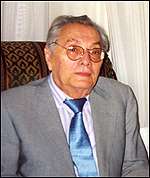
The take-over announcement comes days after a remarkable news conference in Caracas given by Luis Miquilena, 87, who guided Chávez to his first landslide election win. A long-time leftist, Miquilena left Chávez’s cabinet five years ago, and at the news conference he savaged El Presidente. Miquilena thus joined a long list of former Chávez allies who parted company with the autocratic populist after seeing what he was all about. A similar pattern occurred in Cuba as Chávez mentor Fidel Castro showed his true colors, following his democratic “revolution” some 50 years ago.

"This is a government with a hypocritical authoritarianism that tries to sell the world certain democratic appearances," Miquilena said at a daily newspaper, El Nacional, which has been critical of Chávez’s government. "The government is not abiding by any rule. It has all the characteristics of a dictatorial government."

As Miquilena nears the end of his life, it is ironic and sad that he must now bear witness to Venezuela’s slide into what has all the appearances of a dictatorship, albeit for its democratic trappings. He had held his tongue until now. As a young man, Miquilena saw Venezuela emerge from the dictatorship of Gen. Marcos Perez Jimenez into a democracy. By some accounts, he was tortured by that dictator’s secret police.

Miquilena’s comments came days before Chávez was expected to be ruling by “decree.” And once that happens, don’t expect the nation’s airports to hum with efficiency.

Kidnapped

Four years ago, I learned just how bad things had gotten at Simon Bolivar International Airport when I disembarked from a KLM flight from Amsterdam. Having been through the airport many times before, when living in Venezuela, I figured I could differentiate between the good guys and bad guys.

I was wrong.

Getting into a taxi, my driver tossed my bag into the back seat, and I slide in right next to it. Suddenly, two other guys opened the doors on either side and got in. I heard the snap of automatic door locks.

Immediately, I knew what was happening. Frantically, I pulled at the door knobs.

“Calm down, calm down,” said the small wiry man who had pretended to be a taxi driver – right down to the official badge.

Helplessly, I looked out the window as we slowly drove off: The gringo traveler and his three Venezuelan companions in a taxi. Thirty feet away, two apathetic National Guardsmen were engaged in small talk.

The guy in the right-font seat opened the glove compartment. I heard the sickening sound of a semi-automatic being cocked. I knew enough about this sort of thing to know that your chances of survival go down significantly once you’re kidnapped.

I was calm, yet seized with dread. I wondered if the last thing I’d ever see was the guy in the right-front seat turning around and firing a bullet into my chest. The three of them were in their 40s and 50s and looked quite ordinary.

One flipped through my U.S. passport and, seeing a residency stamp for Jamaica, somehow confused me for a Canadian. Maybe it was my lucky day.

“Jamaica is a sovereign country, right?” one said.

“Yes, I have a wife and two kids there,” I replied. It was a lie, calculated to make me seem more human to them. They looked like family men.

They were disappointed I didn’t have more cash – so I overstated the value of the Jamaican dollars I was carrying. That made them happy.

“We’re poor. That’s why we’re doing this,” one of them said. He professed solidarity with Hugo Chávez.

Thirty minutes later, they let me out in a working-class section of Caracas. They'd picked me clean, taking a few hundred dollars, a camera, and a cell phone. They gave me cab fare to get to my destination.

Later, I spoke over the phone with a security officer at the U.S. Embassy.

“I used to live here," I said. "So can I assume it's like it was a few years ago; that it would be a waste of time to report this to the police?”

“Yes, you can assume that.”

He added, “This has been happening a lot. I shouldn’t say this, but a few days ago I got an irate call from the head of security for one of the U.S. airlines flying here.

“One of their captains was kidnapped. It happened exactly like you described.”

KLM, for its part, was wise to this. My flight’s steward told me that KLM no longer let its crews stay overnight in Venezuela: too dangerous. They flew the plane to Curacao and then returned the next day for passengers.

Violent crime has soared in Venezuela after eight years of Chávez. Typically, the sorts of folks who cheer on Chávez are the types who claim that poverty and crime are related. In other words, when poverty goes down, so does crime.

Yet Chávez claims to have reduced poverty – and still crime is soaring. The more likely factors that explain the crime explosion are the same ones found at the international airport – epic levels of inefficiency, corruption, and mismanagement. Travelers heading to Venezuela would be well-advised to look at the State Department's hair-raising report on security there.

Regarding the main airport, here’s an excerpt:

“Maiquetia Airport, the international airport serving Caracas, is dangerous and corruption is rampant. Concerns include personal property theft, muggings, and “express kidnappings” in which individuals are taken to make purchases or to withdraw as much money as possible from ATMs, often at gunpoint. The Embassy has received multiple, credible reports that individuals with what appear to be official uniforms or other credentials are involved in facilitating or perpetrating these crimes.”

Once Chávez’s goons get their hands on the Charallave airport, you can expect more of the same: That’s how authoritarian socialism works.

January 10, 2007


Telephones for the Classes – Socialism for the Masses

Need to phone Venezuela? Forget about it if Hugo Gets His Way

(A magazine article based on this post, "Chavez's New Statism" may be found at FrontPage Magazine. Click here -- DP.) 


By David Paulin

President Hugo Chavez has announced his intention to pursue an authoritarian socialist model for Venezuela, and to nationalize key companies. Predictably, the nation’s stock market and currency has gone into a nasty tail spin.

"We're heading toward socialism, and nothing and no one can prevent it,” Chavez declared on Monday, in a national television address. Today he will be sworn into a third term that runs until 2013.

Chavez's embrace of socialism should surprise nobody who has been paying attention to what he's been saying. He was announcing his radical intentions, loud and clear, as early as 1999 when he took office. Specifically, Chavez vowed on Monday to nationalize Venezuela’s telecommunications company, unspecified electrical firms, and to reduce the Central Bank’s autonomy. Among other things, he also called for additional powers for himself so that he could rule by decree.
In respect to the nationalizations, the biggest prize would be Venezuela’s publicly traded telecommunications company, Compania Anonima Nacional Telefones De Venezuela (known by the Spanish acronym CANTV, pronounced "Can-Tee-V”). “Let it be nationalized," he said. "The nation should recover its property of strategic sectors.”

Before 1991, to be sure, CANTV was a state-owned and managed phone company. It also was an international basket case: People calling across town had trouble getting a dial tone – much less a connection. Calling other cities was virtually impossible.

I lived in Caracas during these years, working as a Caracas-based foreign correspondent for several American daily newspapers. The story of what CANTV was – and what it became in the hands of can-do American managers – is a remarkable one. It’s also testimony to the power of markets to transform an economy – in terms of providing investment, transparency, and accountability.

Inept Management

Poorly managed as a state-owned company, CANTV was rife with do-nothing political patronage jobs and corrupt unions that got what they wanted. In short, it was what you’d expect in a nation with a statist economy that, according to corruption-watchdog Transparency International, was among the world’s most corrupt.
Venezuela had a population of about 20 million people at the time – yet only 1.6 million of them had telephones. It wasn’t for lack of money. Rather, the money-losing state phone company took years to hook up phone lines – unless you had political connections, bribed the right officials or purchased a stolen line. The state phone company, according to some accounts, took out advertisements asking its customers not to use the phones too much.


Like many Third World countries, Venezuela realized it needed a modern telecommunications system to develop its oil-producing economy. After a highly politicized congressional debate, it privatized CANTV. A GTE Corp.-led consortium won a bidding process and acquired 40 percent of CANTV for $1.9 billion. The government retained 49 percent, and workers kept the remaining 11 percent. (Dallas-based GTE Corp. merged in March 2000 with Bell Atlantic to form Verizon Communications.)

Consider some of what the privatized CANTV accomplished: From 1992 to 1994, it invested more than $1.1 billion to upgrade and expand Venezuela's phone system – more than was spent during the 20 years preceding privatization.


Led by American managers, CANTV's 22,000 employees installed more than 863,000 phone lines by 1994 – 4 1/2 times as many as were installed during the two years preceding privatization.

More than 460,000 customers were added, three times more than CANTV connected during the two years before privatization.


Bottom line: By 1994, callers almost always got a dial tone. And they usually got a connection.

“The telecommunications system here was very poorly designed and maintained, with 40-to 50-year-old technology,” CANTV's 40-year-old president Bruce Haddad, a 19-year GTE veteran, told me during an interview in July, 1994.


Haddad had his share of problems. He was spoofed on a Venezuela comedy program, had annual reports tossed at him during an annual meeting, and was called a “gringo” and “foreigner.”


At one point, an arrest warrant that seemed politically motivated was issued against him. He was charged with complicity in a natural gas pipeline explosion, caused by a CANTV sub-contractor, which incinerated more than 50 motorists on a major highway. After lying low for a while, Haddad eventually turned himself in and was exonerated.


He and fellow GTE Corp. managers kept the company moving ahead through two bloody coup attempts (one led by Lt. Col. Hugo Chavez); draconian currency exchange controls, a 100 percent currency devaluation, 70 percent interest rates, and annual inflation of up to 100 percent.
Haddad and fellow GTE Corp. senior executive Douglas Mullen shocked Venezuelan workers by mingling freely with them at functions designed to build esprit de corps – something most status-conscious Venezuelan managers would never do.

It will be interesting to see how CANTV fares once it’s controlled again by Venezuelan managers: state employees of a government that, by all accounts, is involved in record levels of corruption.

Haddad, incidentally, never made it back to the states to settle down with his wife, Dorothy. They died when their corporate jet smashed into the side of a volcano near Guatemala City, Guatemala at 3:30 a.m. on Feb. 19, 1997. They were racing the clock to get to Dallas, where the couple was supposed to catch an airliner to China. Haddad was going there as part of his new position, senior vice president of international operations. Both were 43 years old. They had been high school sweethearts.

Author’s note: This was derived in part from articles I wrote for The Dallas Morning News while based in Caracas. For additional analysis, visit The American Thinker and The Devil's Excrement.

Also see these earlier posts: